
In our example, Barbara had to produce and sell 2,500 units to cover the factory expenditures and had to produce 3,500 units in order to meet her profit objectives. It’s the amount of sales the company can afford to lose but still cover its expenditures. This computes the total number of units that must be sold in order for the company to generate enough revenues to cover all of its expenses. Now we can take that concept and translate it into sales dollars. If you won’t be able to reach the break-even point based on your current price, you may want to increase it.
- That’s why they constantly try to change elements in the formulas reduce the number of units need to produce and increase profitability.
- By raising your sales price, you’re in turn raising the contribution price of each unit and lowering the number of units needed to break even.
- Let’s show a couple of examples of how to calculate the break-even point.
How Do You Calculate a Breakeven Point in Options Trading?
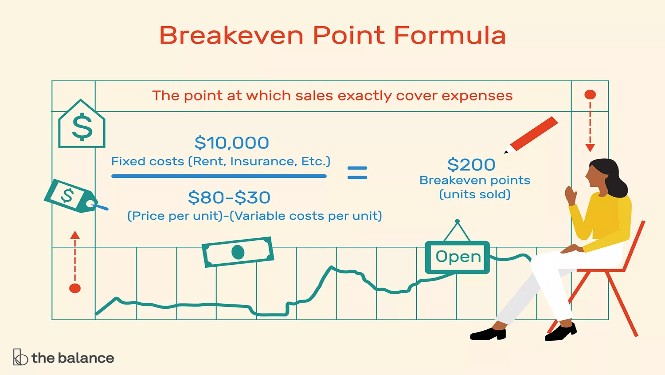
Fixed costs are expenses that remain the same, regardless of how many sales you make. These are the expenses you pay to run your business, such as rent and insurance. At this point, you need to ask yourself whether your current plan is realistic or whether you need to raise prices, find a way to cut costs, or both.
Move, manage, and grow your money
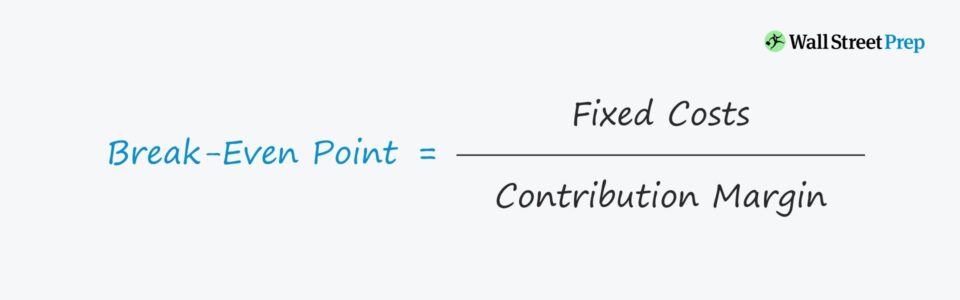
After unit variable costs are deducted from the price, whatever is left—the contribution margin—is available to pay the company’s fixed costs. As you can see, the Barbara’s factory will have to sell at least 2,500 units in order to cover it’s fixed and variable costs. Anything it sells after the 2,500 mark will go straight to the CM since the fixed costs are already covered.
Consignment Stock – The Advantages & Disadvantages
Next, Barbara can translate the number of units into total sales dollars by multiplying the 2,500 units by the total sales price for each unit of $500. Barbara is the managerial accountant in charge of a large furniture factory’s production lines and supply chains. The calculation is useful when trading in or creating a strategy to buy options or a fixed-income security product.
This information is invaluable in setting pricing strategies and making production decisions. Having high fixed costs puts a lot of pressure on a business to make up those expenses with sales revenue. If you find yourself falling short of your break-even point month over month and feel like you can’t change your prices, lowering your fixed costs can be a solution. First we take the desired dollar amount of profit and divide it by the contribution margin per unit. The computes the number of units we need to sell in order to produce the profit without taking in consideration the fixed costs.
How Do You Calculate a Breakeven Point?
We believe everyone should be able to make financial decisions with confidence. Plug in the values from steps 1 to 3 into the formula and calculate the break-even point in units. Check out our piece on the best bookkeeping software for small-business owners. By looking at each component individually, you can start to ask yourself critical questions about your pricing and costs.
Simply enter your fixed and variable costs, the selling price per unit and the number of units expected to be sold. When companies calculate the BEP, they identify the amount of sales required to cover all fixed costs before profit generation can begin. The break-even point formula can determine the BEP in product bank connections units or sales dollars. A breakeven point is used in multiple areas of business and finance. In accounting terms, it refers to the production level at which total production revenue equals total production costs. In investing, the breakeven point is the point at which the original cost equals the market price.
Increasing the sales price of your items may seem like an impossible task. For many businesses, the answer to both of these questions is yes. Break-even analysis works well for short-term planning, like setting immediate sales goals or dedication to prices. Let’s say you run a small bakery and plan to expand the bakery by opening a second location next year.
Assume a company has $1 million in fixed costs and a gross margin of 37%. In this breakeven point example, the company must generate $2.7 million in revenue to cover its fixed and variable costs. The Break Even Revenue Calculator is a useful tool for businesses to determine the amount of revenue they need to generate in order to cover their operating expenses. By understanding your break-even point, you can make better decisions about pricing, sales targets, and cost management.